Why Large Natural Diamonds Are Highly Sought After, Top Reasons Buyers Compete for Exceptional Stones
Large natural diamonds hold a special place in the world of fine gemstones because they combine extreme geological rarity with human desire for beauty, permanence, and prestige. While every diamond has a story shaped by Earth’s deep processes, a large natural diamond represents an extraordinary convergence of time, pressure, chemistry, and chance. As size increases, the number of stones that meet desirable standards for color, clarity, and cut falls dramatically, which fuels demand among collectors, investors, jewelry connoisseurs, and institutions. The reasons go beyond simple surface sparkle, they touch on scarcity economics, practical wearability, cultural symbolism, and the way diamonds perform as portable, globally recognized stores of value.
The points below explain why large natural diamonds remain among the most sought after assets in fine jewelry and high end gemstone markets, and why informed clients often prioritize natural provenance, excellent cutting, and reliable documentation when acquiring a significant stone.
- 1) True geological rarity increases exponentially with size
Natural diamonds are already rare in terms of the conditions required for their formation. They crystallize deep in the mantle under intense pressure and temperature, then must travel to the surface through specific volcanic events that preserve them. Even after discovery, only a fraction of mined material yields gem quality diamonds. When size enters the equation, rarity multiplies rather than adds. A one carat natural diamond is many times more common than a five carat natural diamond of comparable quality, and a ten carat diamond that is clean and well colored is rarer still.
This is not just a marketing statement, it is a structural reality of diamond geology and mining. Large crystals form under stable conditions over long periods, and they must avoid fracturing during ascent and extraction. The bigger the crystal, the more opportunities there are for inclusions, graining, cleavages, or growth irregularities to interrupt transparency and durability. As a result, the pool of large natural diamonds that are also attractive as jewelry gems is extremely limited.
Because supply is constrained by nature rather than manufacturing capacity, large natural diamonds occupy a tier of scarcity that cannot be easily expanded. That scarcity underpins long term desirability and creates competitive buying behavior, especially for stones with well documented origin and exceptional quality characteristics.
- 2) “Size premium” is built into diamond pricing mathematics
Diamond pricing is not linear by carat weight. Two one carat diamonds do not typically equal the price of one two carat diamond of similar color, clarity, and cut. The price per carat rises as carat weight rises because larger rough is rarer, and because larger polished stones are harder to find in attractive quality combinations. That is why buyers often speak of a “size premium” as a defining feature of the diamond market.
This pricing structure reinforces demand. When a diamond crosses key weight milestones such as 2.00 carats, 3.00 carats, 5.00 carats, or 10.00 carats, the market often applies an additional premium because there are fewer comparable stones available, and because these sizes are widely recognized as significant. Even among buyers who are not focused on resale, the awareness that a large natural diamond sits in a rarer pricing bracket increases its perceived importance and status.
For clients considering a major purchase, understanding the size premium helps explain why careful selection matters so much. A buyer is not only paying for weight, they are paying for the near impossibility of replacing that same weight with a similar looking natural stone at the same time, from the same market conditions, with the same documentation.
- 3) Large diamonds deliver visual presence that smaller stones cannot replicate
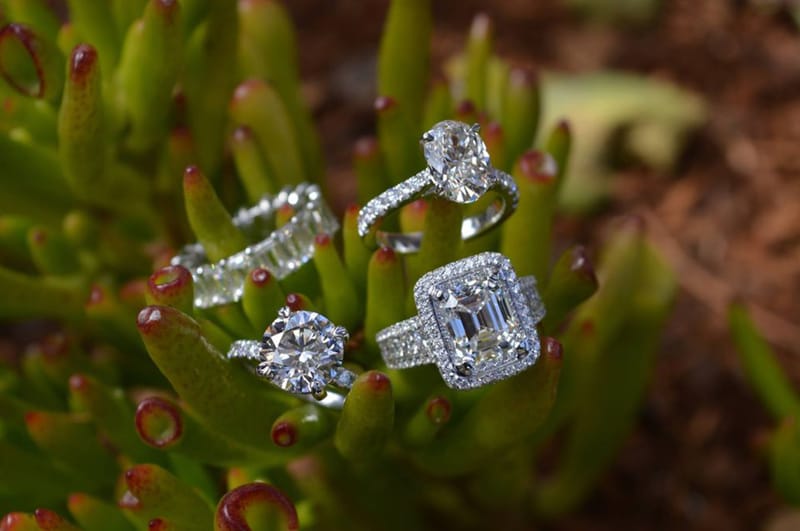
A large natural diamond has a visual authority that is immediately recognizable. Even when perfectly matched in quality, the way larger facets catch light, the breadth of the table reflection, and the overall face up size create an impact that a smaller stone cannot fully imitate. In jewelry, this translates into a statement effect that remains elegant and timeless when the cut is well designed.
Importantly, presence is not just about carat weight, it is also about proportions and cut. A well cut large diamond can appear lively, bright, and balanced from across a room, whereas a large stone with poor proportions can look glassy, dark, or underwhelming. This is one reason large diamonds are so sought after, they offer the opportunity for exceptional optical performance at a scale that is inherently more noticeable.
For engagement rings and heirloom pieces, this presence carries emotional weight. People associate a significant, natural diamond with a milestone achievement, a family legacy, or a personal symbol of permanence. The stone becomes a central design element that defines the jewelry piece for generations.
- 4) Symbolic value, social signaling, and milestone meaning
Across many cultures and historical periods, diamonds have been used to represent commitment, authority, protection, and enduring wealth. The larger the diamond, the more strongly it tends to communicate these themes. This is one reason big natural diamonds often appear in royal collections, museum exhibitions, and notable private holdings.
In modern consumer behavior, large diamonds function as social signals. They can signify personal success, a major life event, or a family’s ability to secure something rare and lasting. For engagements and anniversaries, carat size often becomes shorthand for the significance of the moment, even among people who do not deeply study gemology.
While symbolism can be subjective, market demand is influenced by shared cultural narratives. These narratives contribute to consistent long term desirability for large natural diamonds, particularly those with classic shapes and widely appreciated color and clarity ranges.
- 5) Natural provenance matters more at high carat weights
As diamond size increases, so does the buyer’s sensitivity to origin, authenticity, and documentation. Large diamonds attract attention, and with attention comes scrutiny. Many clients who might be comfortable with lower level documentation for smaller purchases insist on major laboratory grading reports and strong provenance for significant stones.
Natural diamonds carry an appeal rooted in the idea that this is a finite resource formed by nature. For many buyers, that natural origin is integral to the emotional and investment rationale for purchasing a large diamond. When the purchase becomes substantial, clients typically want clarity on whether the diamond is natural, whether it has undergone clarity enhancement, color treatment, or other interventions, and whether it has been responsibly sourced.
This is why large natural diamonds with reputable grading, clear disclosure, and credible sourcing channels tend to command stronger demand. Buyers are not only purchasing a beautiful object, they are purchasing legitimacy, history, and future confidence.
- 6) Auction performance and headline sales fuel desirability
Large natural diamonds frequently become the centerpiece of public auction sales, especially when paired with exceptional color or a famous origin story. Headlines about record prices, rare fancy colors, or remarkable provenance reinforce the perception that large natural diamonds are “trophy assets.” Even buyers who never plan to attend an auction absorb these narratives through media coverage and industry conversation.
This visibility creates a feedback loop. High profile sales validate the market, attract new buyers, and raise awareness of what the upper tiers look like. Over time, this contributes to the idea that the best large diamonds are not merely jewelry, they are internationally tradable collectibles with reputational value.
It is also worth noting that auction outcomes often reward uniqueness. A large diamond with an unusual hue, extraordinary clarity, historical ownership, or a signature cut can become more than the sum of its 4Cs. That possibility of exceptional upside, even if not the primary goal, supports demand for large natural stones.
- 7) Large diamonds can be surprisingly “portable wealth”
In the realm of high value assets, portability is a serious consideration. Real estate is immovable, many forms of art require special handling and provenance verification, and certain collectibles can be difficult to liquidate quickly. A large natural diamond, properly documented and responsibly held, can store highly concentrated value in a small physical space.
This does not mean every large diamond is instantly liquid, and it does not mean buyers should treat diamonds as risk free. However, compared with many luxury assets, diamonds can be transported, insured, stored securely, and recognized internationally through standardized grading systems. For globally mobile clients, that combination can be appealing.
Portability is especially relevant when the diamond is in a classic shape and within commonly traded color and clarity ranges. These features can support easier pricing comparisons and broader buyer interest if resale is ever considered.
- 8) Limited supply is reinforced by mining realities and long timelines
The supply side of large natural diamonds is shaped by factors that move slowly. New mine development takes many years, often decades, and requires enormous capital, regulatory approval, and geological luck. Even productive mines do not reliably produce large, high quality crystals. The distribution of diamond sizes in rough output is heavily weighted toward smaller material.
Additionally, as mature mines age, average yields can change, and some regions produce fewer top quality large stones over time. This does not mean large diamonds will disappear, but it does reinforce the idea that supply cannot be rapidly increased in response to demand. When the market experiences renewed interest in large natural stones, prices can adjust quickly because there is no immediate way to “make more” large diamonds.
This supply rigidity is one reason sophisticated buyers view large natural diamonds as strategic acquisitions rather than impulse purchases. The buyer is interacting with a supply curve shaped by geology rather than manufacturing.
- 9) The cut challenge, large diamonds require expert planning and execution
Cut quality matters for every diamond, but it becomes especially critical for large stones because the financial stakes are higher and the visibility is greater. Cutting a large diamond is not simply scaling up a small diamond’s proportions. The cutter must evaluate the rough’s shape, internal characteristics, and strain patterns to decide how to maximize beauty while managing risk.
A poor cutting decision can sacrifice brilliance, produce a stone that faces up small for its weight, or leave undesirable optical issues that are obvious in a large gem. Conversely, excellent cutting can elevate a diamond’s visual performance dramatically and create a stone that stands out even among other large diamonds. For buyers, a well cut large diamond is sought after because it combines rarity of size with rarity of top tier craftsmanship.
Large diamonds also tend to reveal more about their cutting style. Facet precision, symmetry, and polish are easier to observe when the stone is substantial. That transparency rewards buyers who prioritize detailed grading and who compare stones in controlled lighting before committing.
- 10) High quality color and clarity become much rarer at large sizes
Many people assume that if a diamond is large, it will automatically be impressive. In practice, the most coveted large diamonds are those that pair size with attractive color and clarity. Achieving that combination is difficult. As a crystal grows larger, the probability of inclusions and growth features increases, and maintaining high transparency becomes harder.
A large diamond with excellent color, such as colorless or near colorless grades, and with high clarity, such as VVS or VS in visually clean examples, sits in an especially rare category. This rarity increases demand from buyers who want a stone that looks crisp and bright even under magnification, and who want a gem that will stand scrutiny in any setting.
That said, the market is nuanced. Some buyers prefer a slightly warmer color if it allows for more size, or a lower clarity grade if the diamond is eye clean. The key is that at high carat weights, each step in quality can change pricing substantially, and genuinely beautiful examples become scarce quickly.
- 11) Fancy color large diamonds represent a separate level of scarcity
While colorless diamonds dominate mainstream demand, large diamonds with natural fancy colors, such as vivid yellow, pink, blue, and green, are among the most sought after gems in the world. The rarity of natural fancy colors is profound, and as size increases, that rarity intensifies. A large, strong fancy color diamond can become a category defining stone.
For many collectors, fancy color diamonds provide a way to own something unmistakably unique. The color is not an effect created by fashion trends, it is a natural outcome of trace elements, atomic structure variations, or radiation exposure over geological time. Because fancy colors are graded differently and valued for intensity, tone, and distribution, a truly exceptional stone can command immense attention.
This demand is reinforced by museum level fascination. People remember iconic colored diamonds, and that memorability supports long term desirability. Even buyers focused on white diamonds often track fancy color markets because they shape global narratives about rarity and value in the diamond world.
- 12) Large diamonds anchor bespoke jewelry design and craftsmanship
From a design perspective, large natural diamonds enable a different class of jewelry. They can serve as the central architecture around which an entire ring, pendant, or high jewelry suite is built. Designers can play with negative space, balanced side stones, intricate pavé, or classic solitaire settings that emphasize the diamond’s presence.
Craftsmanship requirements also rise. A large diamond must be set securely while allowing maximum light performance and comfortable wear. This often involves custom engineering of prongs, bezels, baskets, and galleries, along with careful metal choice and precision finishing. Collectors appreciate that the final piece is not only about the stone, it is also about the artistry required to present it well.
As a result, large diamonds are sought after by clients who value personalization. The stone becomes a foundation for creating a unique piece that reflects taste, identity, and occasion, rather than a standardized, mass market presentation.
- 13) Heirloom potential, durability, and cross generational relevance
Diamonds are among the hardest natural materials, which contributes to their suitability for everyday wear in rings and bracelets. Although hardness is not the same as toughness, and diamonds can still chip if struck at the wrong angle, a well set diamond in a protective design can last for decades with proper care.
Large natural diamonds often become heirlooms because they combine durability with lasting aesthetic appeal. Unlike some fashion driven luxury items, a well cut diamond in a classic setting rarely feels outdated. Families pass down significant diamonds as tangible narratives of history, relationships, and continuity.
This heirloom quality contributes to initial demand. Buyers are not just purchasing for themselves, they are purchasing an object that can represent a family for future generations. When a stone is both large and natural, it carries an added feeling of permanence and authenticity.
- 14) Standardized grading supports global trade and confidence
One reason diamonds function well in international markets is that many are graded using widely recognized standards. Laboratory reports typically document carat weight, measurements, color, clarity, cut parameters, fluorescence, and additional identifying characteristics. For large diamonds, such documentation is especially meaningful because it supports verification, insurance, and informed comparison.
Standardization does not eliminate all subjectivity, particularly in areas like cut appearance and the subtle performance differences between stones, but it provides a common language that buyers and sellers can use across borders. A client in one country can evaluate a stone offered from another region with greater confidence when the documentation is thorough and reputable.
Large natural diamonds benefit most from this framework because they often move through high value channels where transparency and accountability matter. The combination of standardized grading and careful sourcing makes it easier for buyers to enter the market and make decisive purchases.
- 15) Market psychology favors “best in class” objects
People tend to desire objects that sit at the top of a category, whether that means the finest craftsmanship, the most limited production, or the rarest natural occurrence. Large natural diamonds fit this “best in class” psychology. They represent an upper tier that many admire and fewer can own.
This psychological dynamic is not purely about status, it is also about the human attraction to extremes. A very large natural diamond is an extreme outcome of natural processes, and it is therefore emotionally compelling. It can trigger a collector’s instinct in the same way that rare coins, first edition books, or top tier watches can, but with the added advantage of immediate visual beauty.
Because demand is influenced by both rational scarcity and emotional appeal, large diamonds maintain strong desirability even as styles shift. The core narrative, rare, natural, beautiful, remains stable.
- 16) A large diamond often looks better in real life than in photos
Diamond photography has improved significantly, but large diamonds still tend to outperform their images when viewed in person. The way a diamond handles light involves dynamic movement, changing angles, and complex reflections that are difficult to capture in a single frame. When the stone is large, these optical effects become more dramatic.
Buyers who view a large natural diamond in multiple lighting environments often notice subtleties that influence desire, such as the crispness of facet junctions, the balance of brightness and contrast, and the presence or absence of distracting inclusions. In many cases, that real life impression is what seals the purchase decision.
This helps explain why large diamonds are so sought after. They create an experiential response, not just an intellectual one. The feeling of seeing a significant diamond spark and flash in person is a powerful driver of demand.
- 17) Ring size and setting choices can optimize “spread” and elegance
Another reason large diamonds attract buyers is that they allow for flexible design strategies to achieve a desired face up size and aesthetic. For example, certain shapes can appear larger per carat than others due to their outline and facet arrangement. Elongated shapes can create a flattering look on the hand, and well proportioned round brilliants can maximize classic brilliance.
Settings also influence perceived size. A delicate solitaire can emphasize the diamond’s dominance, while a halo or tapered baguette sides can frame the center stone and increase visual impact. When the center diamond is large to begin with, these techniques can create a refined but unmistakable presence.
This flexibility supports demand because clients can tailor the final look to personal style while keeping the core asset, a large natural diamond, at the center. The stone remains the primary value, while design choices enhance wearability and visual harmony.
- 18) Large diamonds can be curated as a collection, not just a single purchase
Collectors often build portfolios of gemstones based on size, origin, color, and rarity traits. Large natural diamonds fit naturally into this approach because they can be acquired in different shapes, different color ranges, or different eras of cutting style. For example, a collector might pursue a modern ideal cut round, an antique cushion with a broad flash pattern, and a fancy color stone with a strong saturation.
Because each significant diamond can be meaningfully distinct, the category supports long term collecting interest. This collecting culture contributes to demand because it creates repeat buyers who care about incremental improvements and who understand that exceptional stones are difficult to source.
For the broader market, collector activity also helps stabilize interest in high quality large stones, because collectors often hold items longer and prioritize rarity over short term trends.
- 19) The relationship between light performance and carat weight becomes more noticeable
A small diamond can look lively even with average cutting because the eye has less area to evaluate. In a large diamond, the viewer can easily see whether the stone has strong brightness across the face, whether it has dark zones, and whether scintillation looks crisp or chaotic. This makes performance a major factor for desirability.
Large diamonds that are cut to produce balanced brightness, fire, and scintillation are sought after because they offer both size and refined beauty. Buyers often compare multiple stones and choose the one that “turns on” visually, even if the paper specifications appear similar.
This performance sensitivity rewards expertise. When buyers understand how to evaluate light return, symmetry, and proportion compatibility, they can identify truly outstanding large diamonds. Those stones tend to be chased quickly when they appear on the market.
- 20) Confidence and security increase when buyers work with transparent sourcing and strong guarantees
Because large natural diamonds represent substantial value, clients prioritize secure transactions, reliable payment processing, and clear return and verification policies. Trust is a key ingredient in what makes a large diamond sought after by serious buyers. They want to feel safe, informed, and supported during the selection process.
Transparent sellers who provide complete information about grading, treatments, and sourcing tend to attract stronger demand for large stones. This includes providing high quality imaging, detailed measurements, lab reports from respected institutions, and honest guidance about tradeoffs between size, color, and clarity. Buyers appreciate when a seller can source specific requirements and can present multiple options within a target budget and style goal.
When the acquisition process is secure and professional, clients are more willing to pursue rare, high carat diamonds because the perceived risk decreases. This, in turn, reinforces demand in the upper end of the market.
- 21) Large diamonds are often chosen for their uniqueness, not just their grade
Two diamonds can share the same carat weight, color, and clarity on paper yet look different in personality. In large stones, these differences can be more noticeable because facet patterns are larger, inclusions can have different visibility, and slight proportional changes can shift the overall impression.
Buyers often fall in love with a specific stone’s “feel,” such as a particular balance of broad flashes versus pinfire scintillation, a pleasing outline in an elongated shape, or a distinctive facet pattern in an antique cut. This individuality makes large natural diamonds emotionally compelling. They are not interchangeable commodities at the top end, they are individual gems with their own identity.
This is another reason large natural diamonds are highly sought after. They offer a sense of personal ownership over something that cannot be perfectly duplicated, even with similar grades.
- 22) Informed buyers can choose strategic tradeoffs to maximize beauty and value
At large carat weights, small changes in color or clarity can create very large price differences. This creates opportunities for smart selection. Many buyers pursue an “eye clean” clarity grade rather than the highest clarity grade if it allows them to reach a larger carat weight or a better cut quality. Others may choose a near colorless range that still faces up very white in the chosen setting, particularly in yellow or rose gold.
These strategic choices are part of why large natural diamonds remain in demand. The category supports personalization based on what the buyer values most, whether that is maximum size, maximum whiteness, maximum brilliance, or a balance. With expert guidance and careful viewing, buyers can acquire a stone that looks exceptional without paying for characteristics that do not matter to them.
Because the buyer can optimize for personal priorities, large diamonds become not only aspirational objects but also rewarding purchases for those who enjoy learning and selecting thoughtfully.
- 23) Large natural diamonds remain relevant across fashion cycles
Fashion changes quickly, but certain symbols endure. Large natural diamonds have remained desirable through many eras, from classic solitaires to Art Deco designs to modern minimalism. The reason is simple, a beautiful diamond is not dependent on seasonal trends. It is fundamentally an optical phenomenon combined with rarity.
Even when particular shapes trend, such as ovals, emerald cuts, or cushions, the broader appeal of a large, well cut diamond remains consistent. A significant stone can be reset, redesigned, or reimagined while retaining its identity and value. This adaptability supports long term desirability and encourages buyers to view large diamonds as enduring assets rather than short lived fashion items.
This enduring relevance also supports heirloom value. A large natural diamond can be worn today and still feel meaningful and current decades later, particularly if it is cut and set with taste and proportional harmony.
- 24) For many buyers, large natural diamonds represent “the top of the dream”
There is a psychological peak experience associated with owning something rare, natural, and universally recognized. A large natural diamond often occupies that peak in the jewelry world. It is a dream object because it is instantly understood, even by people who do not know gemological details. The material communicates beauty and achievement without needing explanation.
This dream factor builds demand that is resilient. Even when economic conditions fluctuate, the highest quality, rarest objects often keep a dedicated audience. Some buyers may pause during uncertain times, but the underlying desire for exceptional stones does not disappear. When confidence returns, buyers often pursue the best pieces available, and large natural diamonds are high on that list.
The combination of emotional appeal, symbolic meaning, and measurable scarcity explains why the category remains strong in both private sales and public markets.
- 25) Practical guidance, what to prioritize when seeking a large natural diamond
Understanding why large natural diamonds are sought after also clarifies how to choose one wisely. Carat weight should never be considered in isolation. Beauty and value depend on the full profile of the stone and how it fits the buyer’s goals.
- Prioritize cut quality and light performance, a large diamond should look lively and bright, not dull or dark.
- Use reputable grading documentation, especially at higher carat weights, to confirm natural origin, quality factors, and any treatments.
- Choose clarity based on what is visible, many buyers target eye clean stones rather than paying for microscopic rarity.
- Consider color in relation to setting metal, near colorless diamonds can appear very white in yellow or rose gold settings.
- Evaluate face up measurements, stones of the same carat weight can look different in size depending on depth and proportions.
- Assess fluorescence and nuance, fluorescence can be neutral or beneficial in some cases, but it should be evaluated stone by stone.
- Work with sellers who offer secure transactions and transparent sourcing, confidence and documentation are part of the value.
When buyers combine these practical considerations with the deeper reasons behind desirability, they can make acquisitions that feel both emotionally meaningful and objectively sound. Large natural diamonds are sought after because they deliver what few objects can, enduring beauty, extreme rarity, and a universally recognized symbol of permanence, all embodied in a single stone.